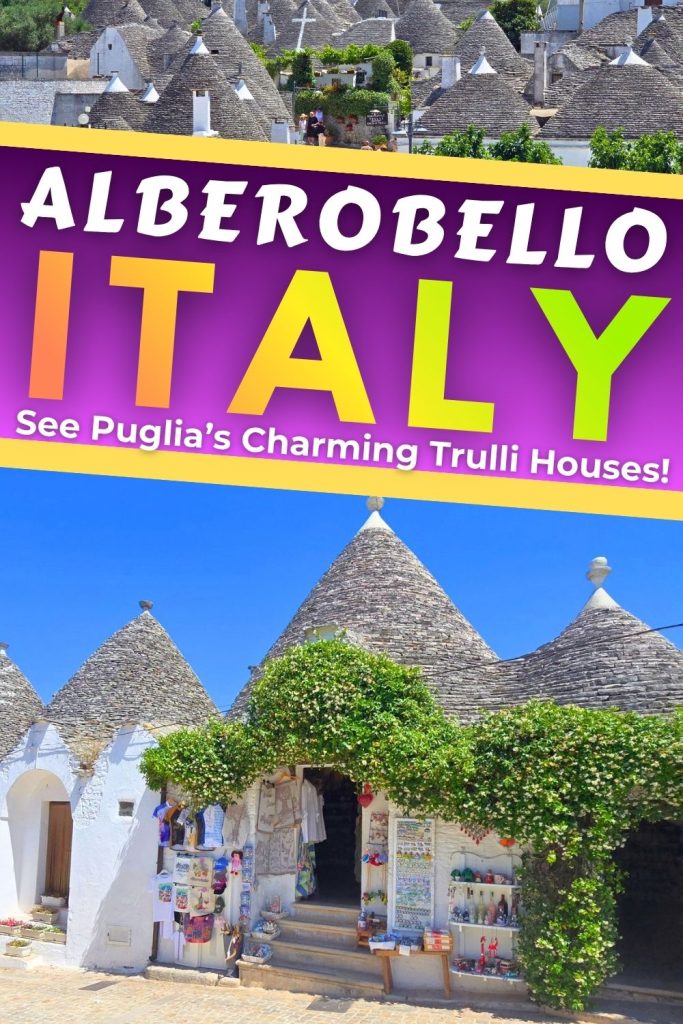
Italy’s Fairytale UNESCO Village of Alberobello is “Trulli” Magical

Famous for its whimsical huts with conical roofs, the quaint village of Alberobello is a must-see when you visit Puglia. Here’s how to visit!
I’ve been to a lot of places in my travels that sound better on paper than they are in real life. Alberobello is not one of them.
This small town in the Puglia region of southern Italy is one of the most visually unique places in Europe. It looks like someone built a village for a Disney fairy tale and forgot to take it down.
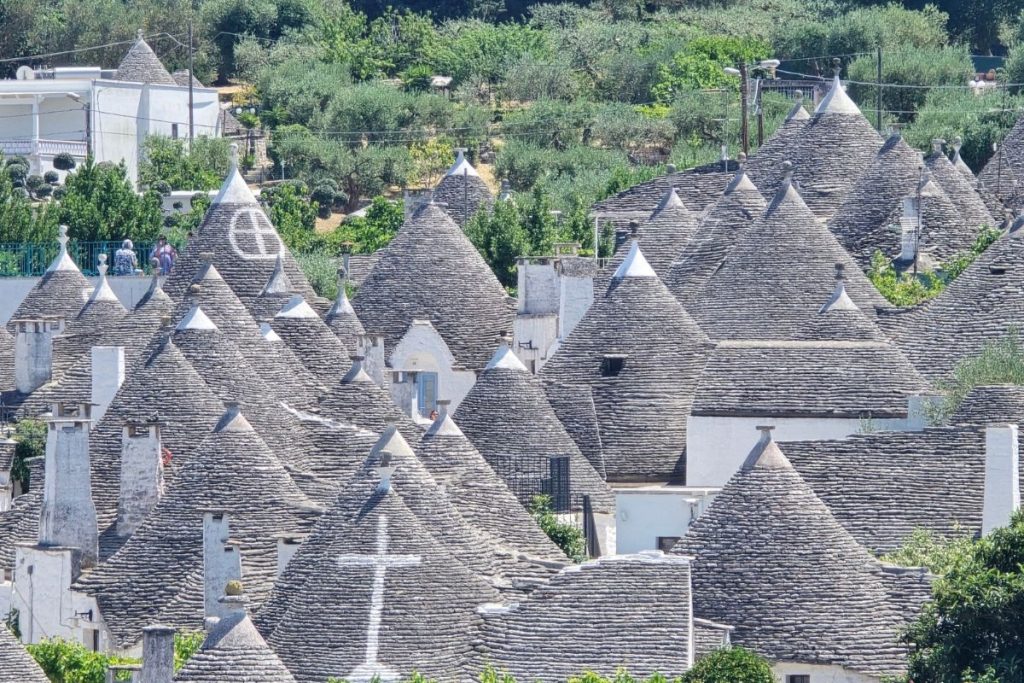
The draw here is the trulli, those iconic dry-stone huts with conical roofs that make Alberobello look like nowhere else on earth.
It’s the only place in the world where you’ll find this many of them clustered together in a living, functioning town.
Note: This post may contain affiliate links. If you choose to book through these links, I receive a small commission, which I will undoubtedly blow on more flights (it’s a vicious cycle). All of this internet voodoo takes place at no additional cost to you.
Yes, it’s touristy. Yes, it’s generally packed with tour groups each day.
But if you’re visiting Puglia, this is one spot you don’t want to miss.

Planning a trip to Italy in 2026?
From jaw-dropping destinations to how to find the best gelato, here’s everything you need to know to plan your trip to Italy.
A Quick History of Alberobello
Understanding the history of Alberobello before you visit is the best way to fully appreciate it. The name roughly translates to “beautiful tree,” it’s a nod to the oak forest that once covered the area.
In the 14th century, the Acquaviva family, the feudal lords of the Itria Valley, allowed peasants to settle here on one very specific condition.
They had to build their homes in a way that could be quickly demolished.
Why? Tax avoidance, of course.
To escape paying taxes to the Kingdom of Naples, the local rulers needed to claim the land was uninhabited whenever the royal tax collector came around.
The trulli, built using a prehistoric dry-stacked limestone technique with no mortar, could be knocked down fast and rebuilt just as quickly. Just pull the keystone out of the conical roof, and the whole thing collapses as if it was never there.
Clever, certainly. But likely a bit exhausting as a way to live.
This went on for centuries. Finally, in 1797 a local merchant named Casa d’Amore petitioned the King of Naples directly, and the town was finally granted official status.
That moment is considered the founding of modern Alberobello.
Construction of the trulli continued, now as permanent residences. The town was declared a national monument in 1930 and added to the UNESCO World Heritage List in 1996.
How to Get to Alberobello
✈️ By Air
The closest major airport is Bari Airport (BRI), which has good connections from across Europe and some long-haul options via Rome or Milan. From Bari, Alberobello is about 55 kilometers southeast (roughly an hour by car or just under two hours by public transport).

🚂 By Train
The train is actually a great option here. The Ferrovie del Sud Est (FSE) regional line runs from Bari through the Valle d’Itria, stopping in Alberobello at its own train station right in town.
The journey takes around 90 minutes, and the views through the Itria Valley and past the olive groves are worth the ride on their own. From the train station, the main trulli zone is a short walk uphill.
Tip: Check the FSE timetable in advance. This is a regional line, and trains don’t run constantly. Gaps of two hours or more between services are common, especially on weekends.
🚗 By Car
Driving gives you the most flexibility. If you’re combining Alberobello with nearby towns like Ostuni, Martina Franca, or Locorotondo, you’ll definitely want to have your own wheels. The roads through the Valle d’Itria wind past olive trees and vineyards; it’s a lovely drive.

Discover Cars
My favorite rental car booking site to use all over the world. No hidden costs, free cancellation, and 24/7 customer support.
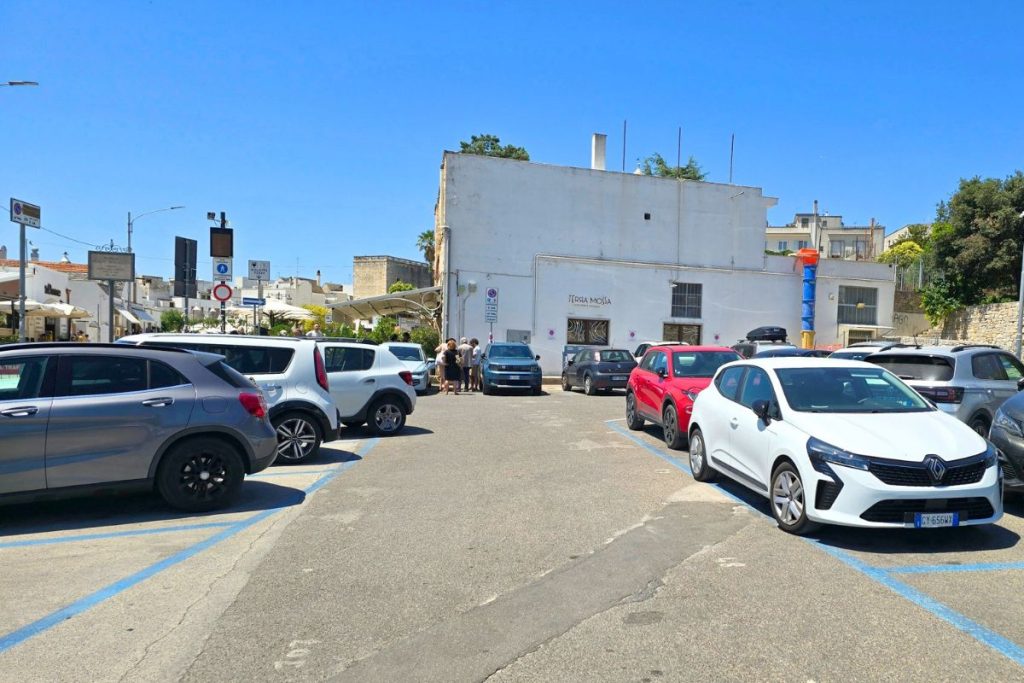
That said, parking in Alberobello can be frustrating in high season. There are several parking lots on the edge of the historic center.
Tip: Don’t park in the first lot you see. We were able to drive right up to the lot closest to the historic center and find a spot (a huge win on a very hot day!). Here’s the map link to where we parked. Don’t forget to pay at the machine before you leave the lot.
🚌 Best Day Trips to Alberobello
If you’re staying anywhere within the Puglia region, there are plenty of organized day trip options to visit Alberobello. Most depart from Bari and also include Locorotondo, Ostuni, or Matera. Here are a few of the best options:
Best Day Trips to Alberobello from Bari:
- Alberobello & Matera: Full-Day Private Tour from Bari
- Alberobello, Monopoli & Polignano da Bari – Puglia Experience
- UNESCO’s Alberobello and Matera from Bari
🏡 Where to Stay in Alberobello
I strongly recommend staying overnight in Alberobello rather than treating it purely as a day trip from Bari or Polignano a Mare.
The town completely changes character after the tour groups leave in the late afternoon. Staying in the Rione Monti district overnight gives you access to that quieter evening version that most visitors never see.
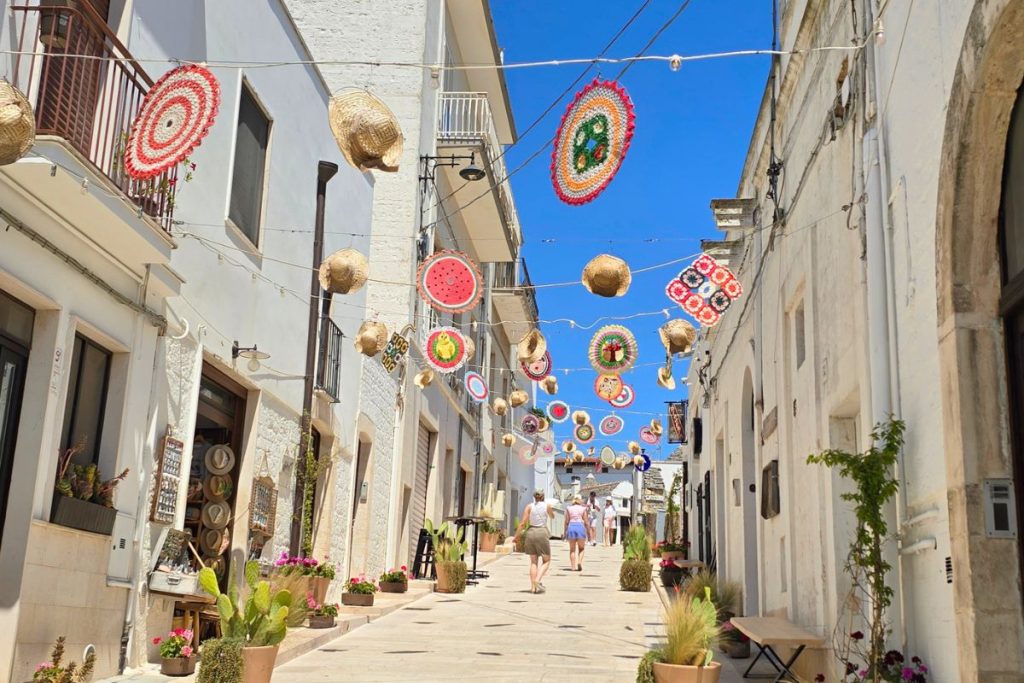
And, of course, you can’t come to Alberobello without actually staying in a trullo house. Here are a few of my favorite options:
Best Trulli Hotels
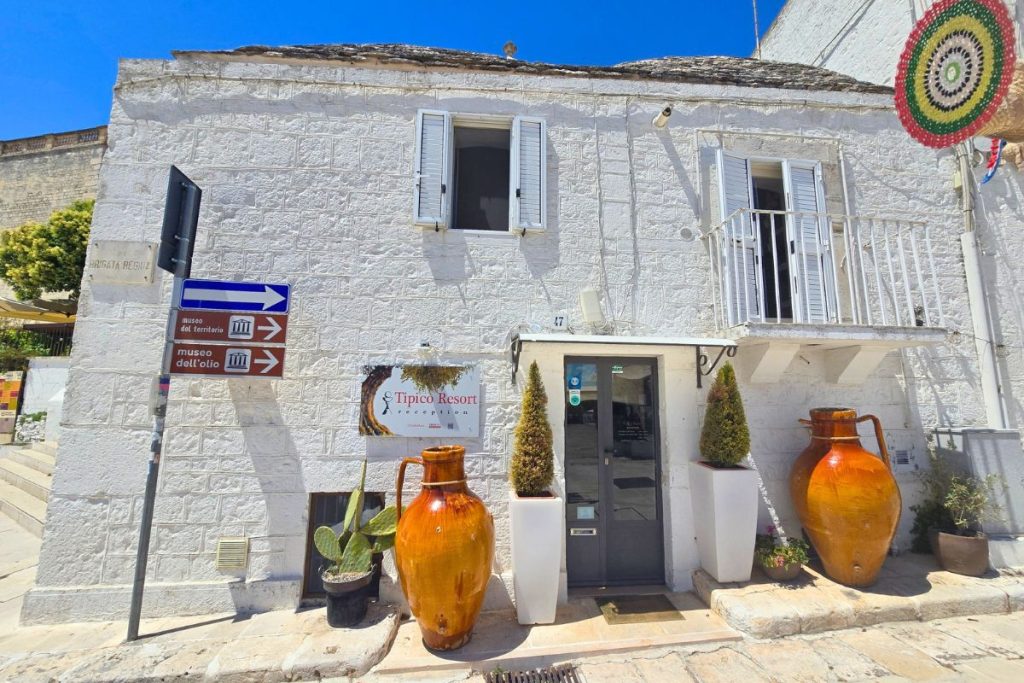
Tipico Resort – This small property in the heart of the historic center is a great budget-friendly choice. The hotel is a mix of traditional Apulian Trulli houses and rooms located in the main stone building. If you want the trullo experience, be sure to book a trullo room.
Romantic Trulli – For couples, this one is hard to beat. The one-bedroom, one-bath apartment is full of authentic charm, but the standout feature here is the large spa bath surrounded by stone.
Trullo Antica Bellezza – This cute and cozy 2-bedroom trullo house has the historic charm with all the modern conveniences. Located just far enough outside the center to be quiet at night, it’s still just steps away from all the best sights in Alberobello.
Best Trulli Airbnbs
Hermanas Relais – Trulli Luxury – If you’re travelling with the whole family, this roomy 3-bedroom trullo is “trulli” a fairytale (sorry, I couldn’t help myself). Well-appointed, spacious, and spotlessly clean, it has everything you need for the perfect stay in Alberobello, including a lovely outdoor patio area.
Trullo Naiira – Jacuzzi & Patio – For a romantic stay in Alberobello, it’s hard to beat this gorgeous one-bedroom trullo where traditional construction meets modern, chic design. The highlight here is the jacuzzi bath, the perfect place to relax after a day exploring the town.
Fun Things to Do in Alberobello
1. Walk the Rione Monti District
This is the main area and the largest concentration of trulli anywhere in the world. Over 1,000 trullo buildings are packed onto the hillside. Sure, it’s busy and full of souvenir shops. But it’s still the one part of town you can’t miss.
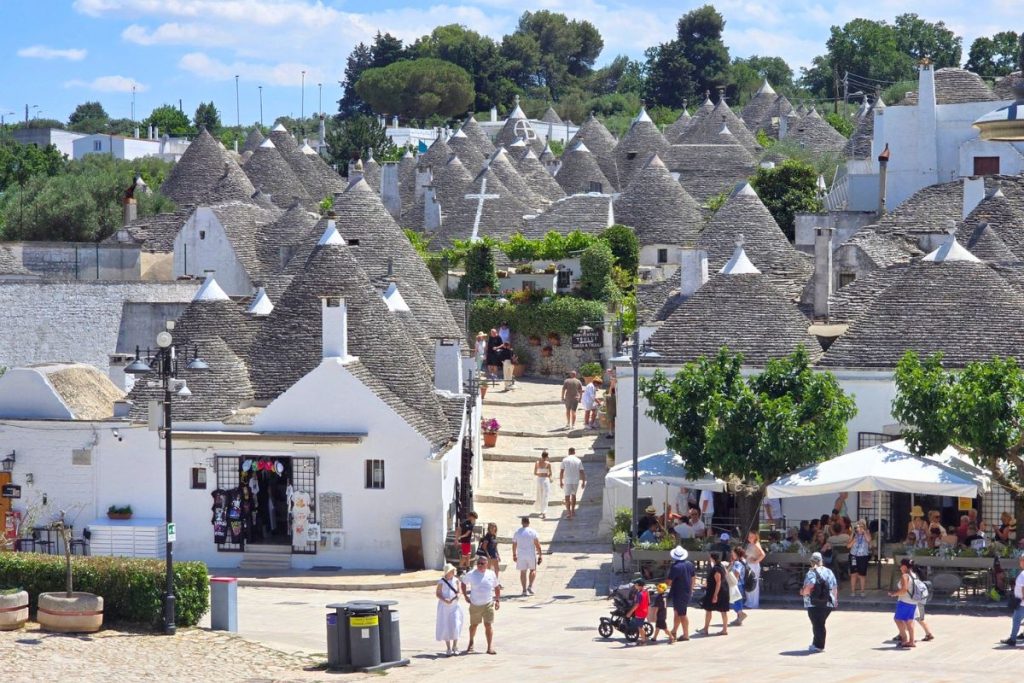
Walk the narrow streets anyway, particularly in the early morning or evening when the tour groups have thinned out. The sheer density of conical roofs in every direction is something photographs can’t fully capture.
2. Explore Rione Aia Piccola
Cross to the other side of Piazza del Popolo and you’ll find Rione Aia Piccola, a smaller and significantly less touristy trulli zone. Fewer gelato shops, fewer souvenir stands, more actual residents going about their lives.
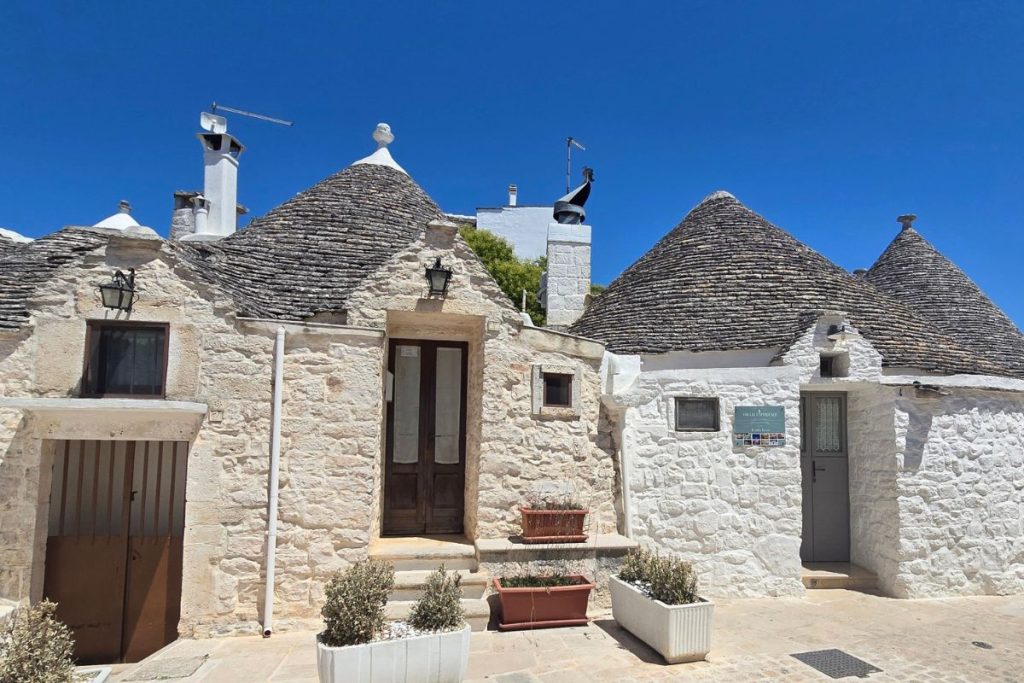
I’d argue it’s the better of the two for atmosphere. The trulli here are still inhabited, and you can feel the difference between a living neighborhood and the more touristy side.
3. Visit Trullo Sovrano
The Trullo Sovrano is the only trullo in Alberobello built with two floors. It’s an architectural anomaly given that the traditional construction method doesn’t lend itself to stacking. It now functions as a small museum inside the historic center.
It’s a good place to get a sense of how these buildings were actually lived in, with the original building materials and room layouts intact. Worth the modest entrance fee.
4. See the Church of Sant’Antonio
At the top of the hill in Rione Monti, the trullo church (officially the Church of Sant’Antonio) is a functioning Catholic church built entirely in trullo style.
With a conical roof rising to a point above the altar, it was built in the early 20th century and consecrated in 1927. The interior is simple and quiet, which makes it a good refuge from the bustle outside.
5. Go to the Best Viewpoints
The panoramic view from the Belvedere on Via Monte San Michele is the one you see on every postcard and magazine cover. It looks out over the trulli district with the conical roofs receding into the distance.
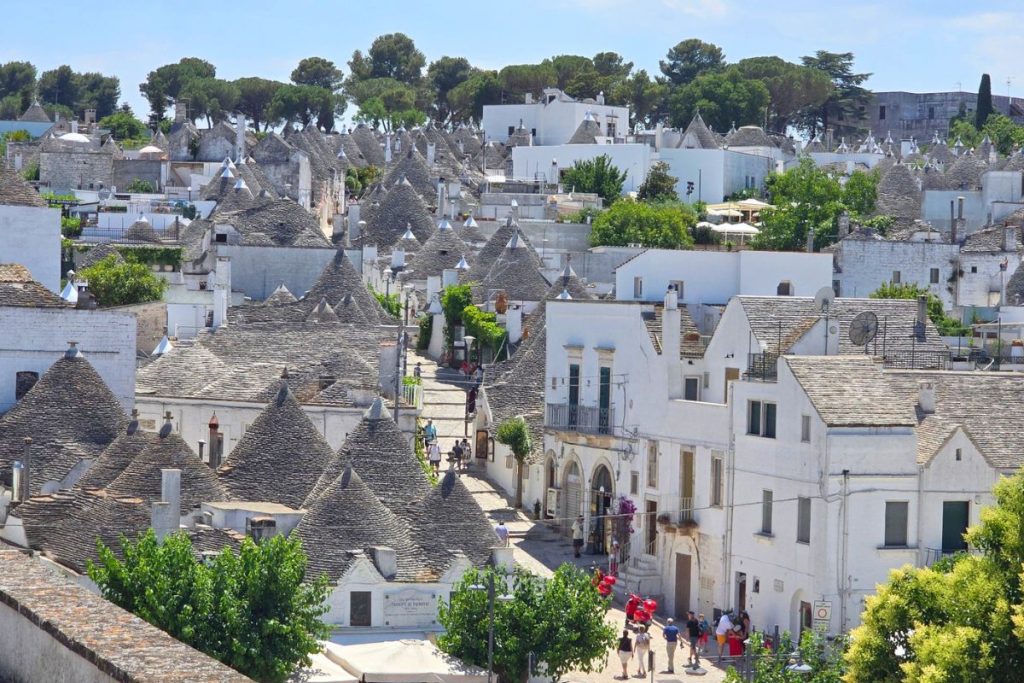
There are also good views from the top of the hill at Piazza XXVII Maggio and from a few spots in Rione Aia Piccola that most visitors walk straight past.
6. Visit Casa Pezzolla
Casa Pezzolla is a complex of 15 connected trulli that now houses the Museo del Territorio (the Museum of the Territory). It covers the culture of Alberobello, the history of the Valle d’Itria, and the construction techniques behind these buildings.
The Museo Storico section covers the specific political history behind the town’s unusual origins. It takes about an hour to visit.
7. Take a Guided Tour
I don’t always recommend guided tours. But in Alberobello, the history is so layered and strange that having someone explain it in real time makes a significant difference.
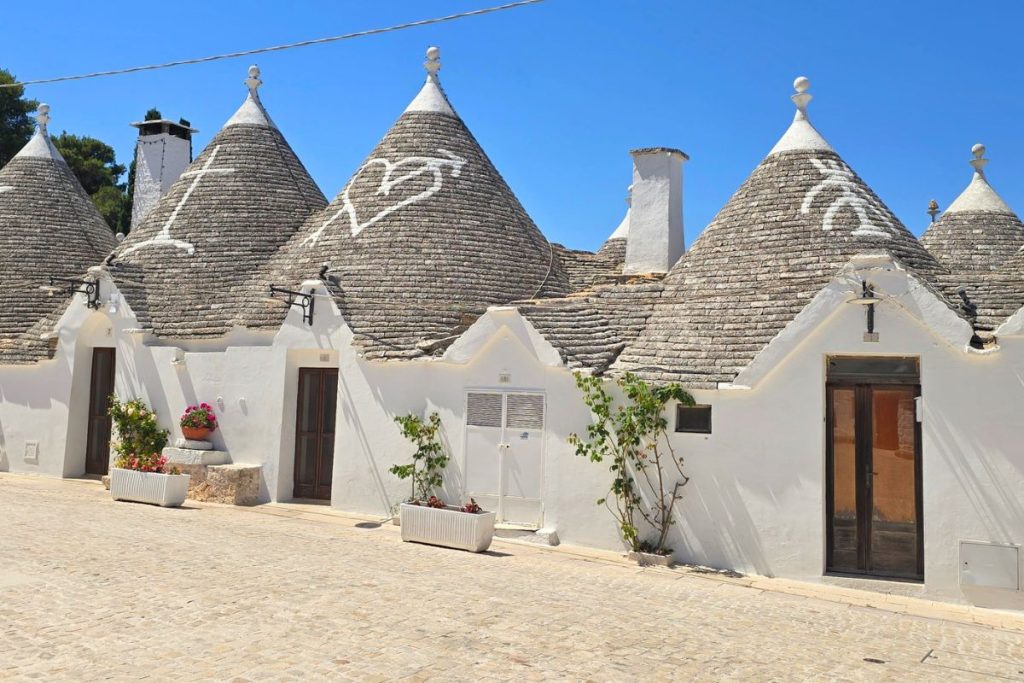
A good local guide will take you into trulli that aren’t on the standard path. They can also explain the double skin construction technique that kept these buildings cool in summer and warm in winter, and point out the symbolic markings painted on the conical roofs that most people walk past without noticing.
Tip: This 90-minute Private Guided Tour in Alberobello is my top pick for local history.
8. Eat Local Food
The trulli get all the attention, but the local food deserves more of your attention. Look for orecchiette with turnip greens, anything involving local olive oil, focaccia, and the regional cheeses.
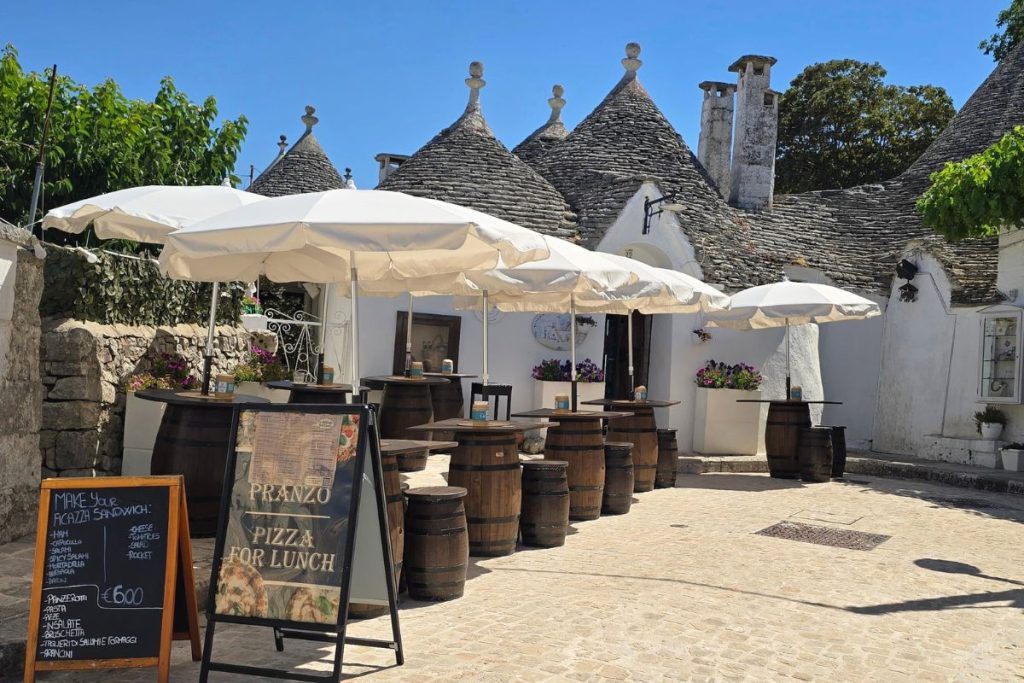
For a quick bite, La Lira Focacceria near Piazza del Mercato does excellent focaccia barese and is a reliable option when you want something fast without sacrificing quality.

9. Day Trip to Martina Franca
If you’re based in Alberobello, Martina Franca is an easy 20-minute drive and a completely different character. It’s a Baroque hilltop town with an elegant historic centre, good restaurants, and significantly fewer visitors than Alberobello.
10. Day Trip to Matera
The ancient stone city of Matera is one of the most incredible places to visit in the region. Located about an hour from Alberobello, it’s absolutely worth the detour.
The stone caves here were inhabited for thousands of years before the Italian government moved the local residents into more modern housing for health reasons in the 1950’s.
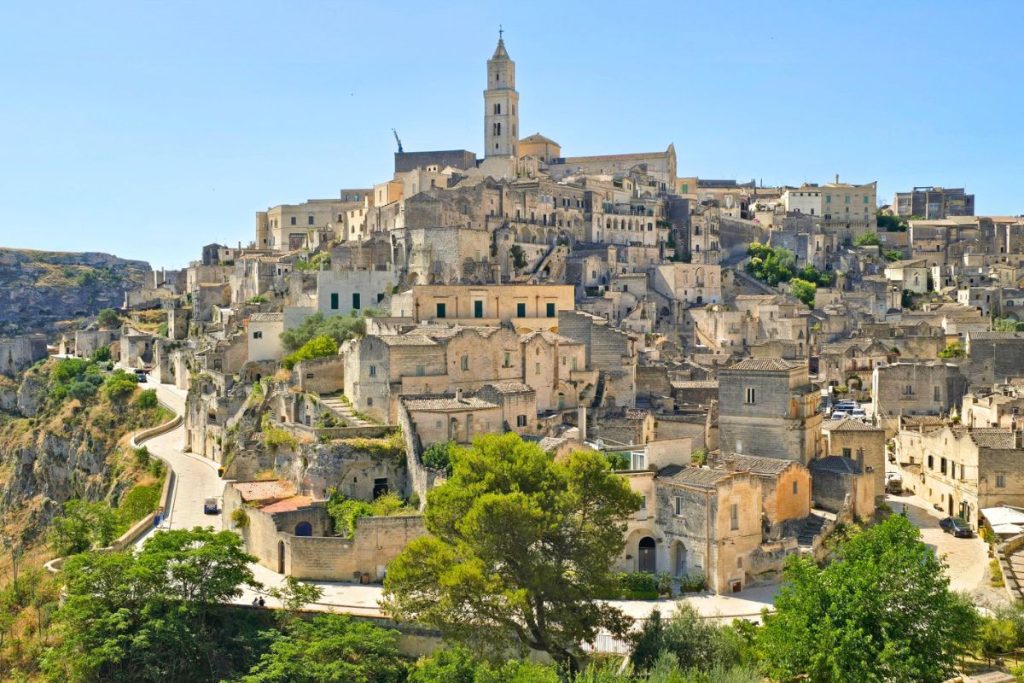
The history here is truly remarkable; it’s one of the most amazing places I’ve ever visited in Italy. If you have the time to spare, spend a night in one of the luxury cave hotels.
We spent a night in a cave suite at the Sant’Angleo Resort Matera and it was an awesome experience.
Read More: Once Italy’s Greatest Shame, The Ancient Stone City of Matera is a Hidden Treasure
Is Alberobello Worth the Trip?
Without question.
The trulli of Alberobello are one of those rare things that actually live up to the photos.
But what makes Alberobello worth the trip isn’t just the architecture, it’s the layers underneath it. The strange tax-dodge history, the living neighborhoods, the cave cities an hour down the road.
Puglia is one of Italy’s most unique regions, and Alberobello is a perfect base for exploring all of it.
Stay at least one night inside a trullo. Walk Rione Aia Piccola in the evening when the day-trippers are gone. Drive out to Matera if you have the time.
And eat the orecchiette.
You’ll leave wondering why it took you so long to get here.
Looking for more amazing places in Italy? Start here:
Headed to Italy? Here Are 15 Amazing Places to See from the Alps to the Amalfi Coast 🏔️🍋
5 Incredible Italian Islands to Add to Your Travel Bucket List (#4 is a True Hidden Gem)
Forget the Amalfi Coast: Puglia’s Polignano a Mare is Italy’s Most Dramatic Seaside Gem
How to Spend 4 Days on Italy’s Brilliant Amalfi Coast (Without Breaking the Bank)