
7 Tiny Countries in Europe You Can Explore in One Day (but you’ll want to stay longer!)


From the world’s smallest state to the last remaining grand duchy, these tiny European beauties prove that big charm comes in small packages.
Europe has a funny way of packing a lot into very small spaces.
And there’s no better example of that than some of Europe’s charming, pint-sized nations.
Scattered across the European continent are a handful of European microstates and small nations that pack centuries of history, culture, and jaw-dropping scenery into a surprisingly petite package.
But, don’t underestimate these tiny nations, what makes them so special is how easy they are to explore.
Note: This post may contain affiliate links. If you choose to book through these links, I receive a small commission, which I will undoubtedly blow on more flights (it’s a vicious cycle). All of this internet voodoo takes place at no additional cost to you.
Some are located near (or completely within) another popular tourist destination. Others can be easily reached by a short train journey or a quick flight to a convenient airport just minutes away.
In some cases, you can explore the entire country in a single day. Walk through a medieval old town, tour world-class museums, visit the capital city, and still have time for a leisurely lunch with a view.
The bottom line?
What these countries lack in real estate, they more than make up for in real experiences.
So let’s get to know them, shall we?
Here, I’ve ranked seven of Europe’s smallest countries from smallest to largest.
And while each of the countries on my list is easy to explore in a single day, I’ve also included my favorite hotel options in case you decide to stay longer.
First up, the smallest (and most famous) member of the list…
1. Vatican City
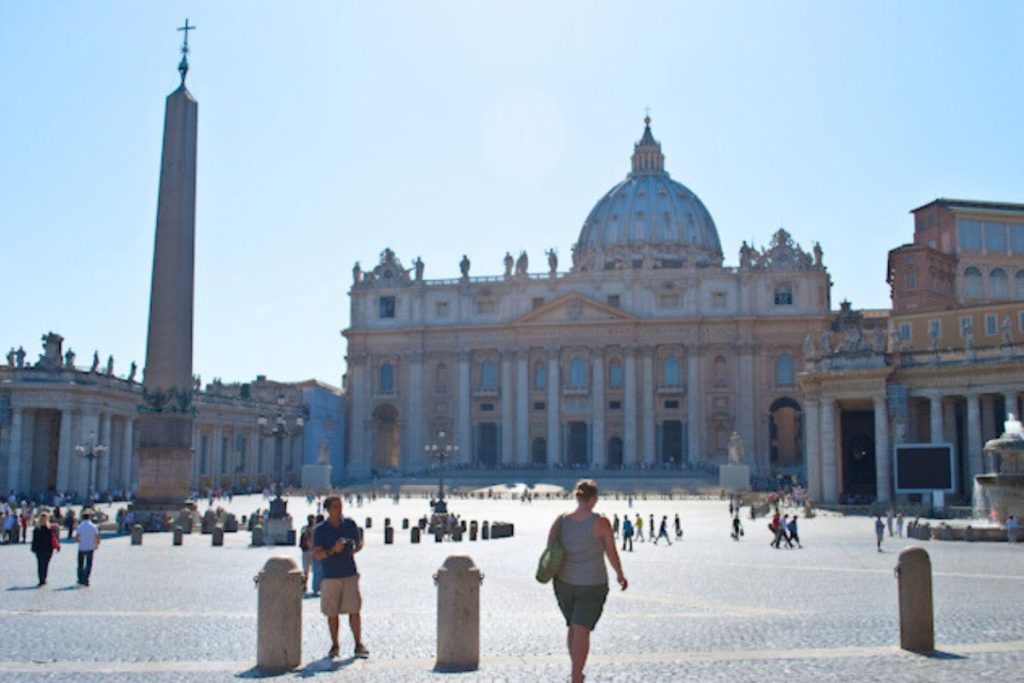
At just 0.19 square miles, Vatican City is the smallest nation on Earth and the most compact of all the European microstates.
This independent city-state sits entirely within the city of Rome, yet it operates as its own sovereign state under the authority of the Holy See. Vatican City is the spiritual center of the Roman Catholic Church and one of the most important religious destinations in the world.
No other country in the world packs this much history, art, and global influence into such a small space and that’s the main draw for visitors.
Though the official language is Latin, Italian is widely spoken day to day. Despite its size, Vatican City maintains international recognition, diplomatic relations, and observer status with the United Nations.
The Vatican Museums alone are reason enough to visit. This vast complex of galleries houses one of the most important art collections on the planet, spanning centuries of religious history and classical antiquity.
The absolute highlight is the Sistine Chapel, where Michelangelo’s ceiling remains one of the most awe-inspiring works of art ever created.
Just steps away stands St. Peter’s Basilica, the largest church in the world and one of the most important sites in Christianity.
The basilica dominates St. Peter’s Square. You can climb to the dome for sweeping views over Vatican City and Rome beyond. Reservations can be made for the stairs (or the lift) to the top on their website.
Watching the Swiss Guard in their traditional uniforms is another fun thing to do when you visit.

Because of its compact layout, you can explore the entire country on foot in just a few hours. But timing matters here. The summer months bring intense crowds, especially during July and August.
Standard tickets to explore the Vatican Museums and the Sistine Chapel can be booked directly on their website and come with an audio guide.
But if visiting the Vatican has always been on your Travel Bucket List, I highly recommend booking a fully guided tour like this Skip the Line Vatican, Sistine Chapel, St Peter Small Group Tour.
A visit to Vatican City is truly an unmatched experience. It is a fantastic place to witness how faith, art, and power intersect inside the smallest European country on the map.
How to Get There
Located entirely within Rome, Vatican City is the most accessible of the destinations on this list. The closest airport is Rome Fiumicino Airport (FCO). From there, frequent trains run directly to central Rome. Vatican City is a short metro or bus ride from major train stations like Roma Termini.
Where to Stay
Just steps from St. Peter’s Basilica, the Hotel della Conciliazione is a great option for an overnight stay.
Read More: The Best of Rome in 48 Hours (Plus: 7 Things You Can’t Miss!)
2. Monaco
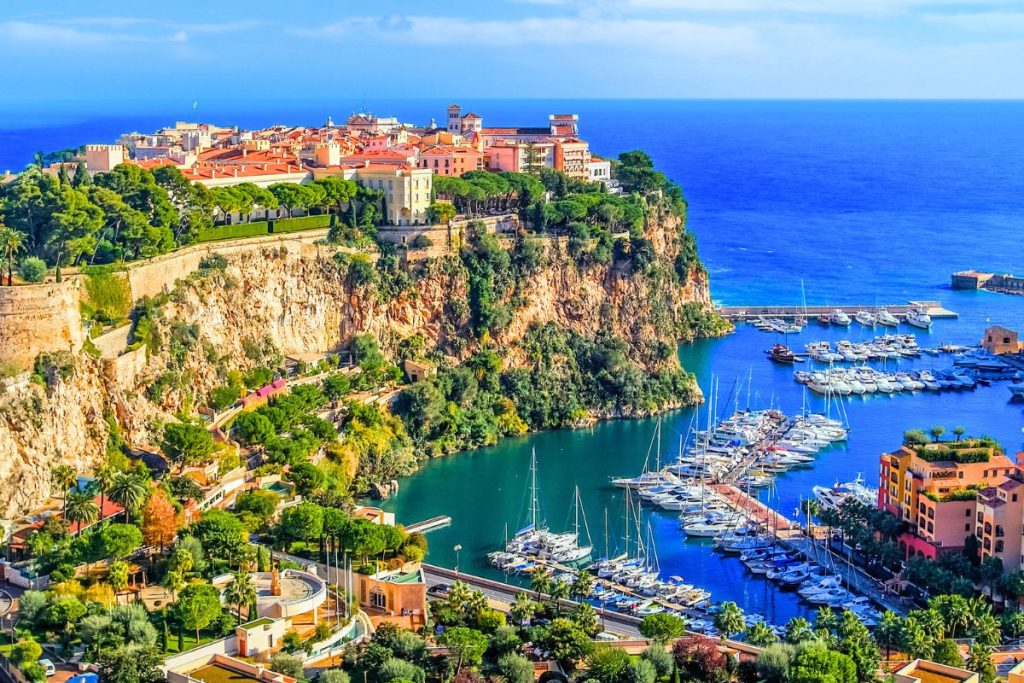
Covering just 0.78 square miles, Monaco is the second-smallest country on Earth and perhaps the most famous tiny country in Europe.
Wedged between France and the Mediterranean Sea, this minuscule nation delivers maximum glamour, dramatic coastal views, and a reputation built on wealth, speed, and royalty.
Located along the French Riviera, a stretch of coastline synonymous with luxury and sunshine, Monaco is a fully sovereign state with a long history, ruled by the Grimaldi family.
The principality has existed in some form since the Middle Ages, making it one of Europe’s oldest continuously governed territories. Today, it remains a constitutional monarchy and one of the most densely populated countries in the world.
The country’s capital area is centered around Monte Carlo, home to the iconic casino that helped shape Monaco’s modern identity.
The Monte Carlo Casino is one of the most recognizable landmarks in Europe and a magnet for high rollers from around the globe. Even if you never place a bet, walking through the casino district delivers some of the best people-watching on the continent.
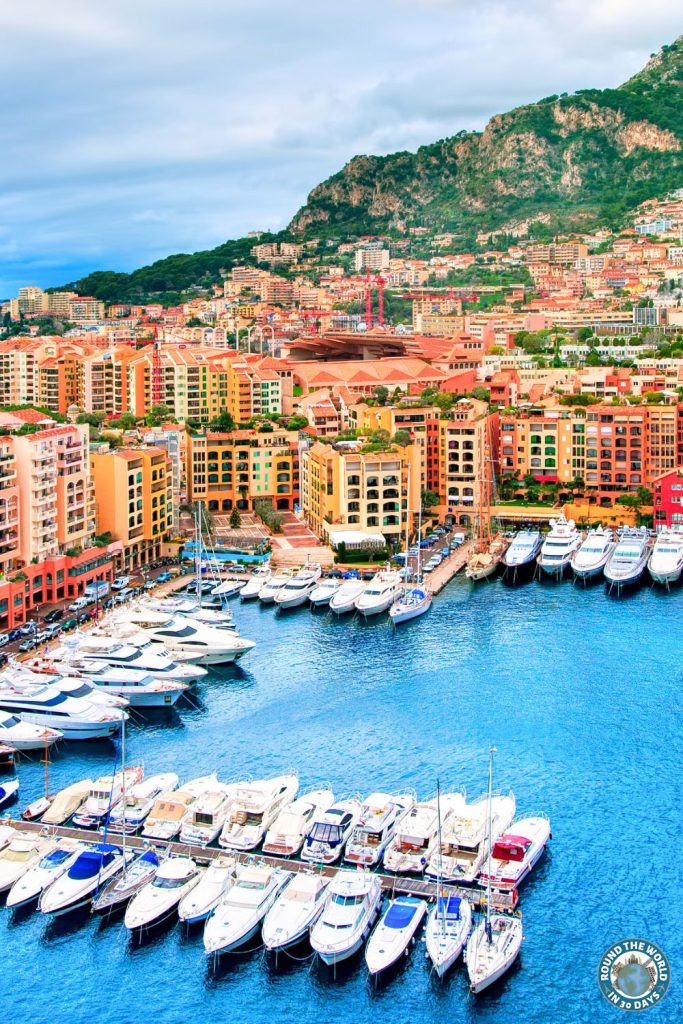
Beyond the glitz, Monaco has genuine historic charm.
Monaco-Ville, often called the Old Town, sits high on a rocky promontory known as Le Rocher. This area feels worlds away from the yacht-filled harbor below. Narrow streets, pastel buildings, and viewpoints overlooking the sea make it one of the most photogenic corners of the country.
The Prince’s Palace, still the official residence of the ruling family, anchors the old town and the entire country is walkable. Though its steep hills mean you’ll get a workout along the way!
How to Get There
The closest airport is Nice Côte d’Azur Airport (NCE) in France. From Nice, frequent trains make the short train journey along the coast to Monte Carlo. It’s an easy day trip from southern France, with frequent trains connecting it to nearby cities along the Riviera.
Where to Stay
For a classic French Riviera stay, Hôtel de Paris Monte-Carlo puts you right in the heart of Monte Carlo.
3. San Marino
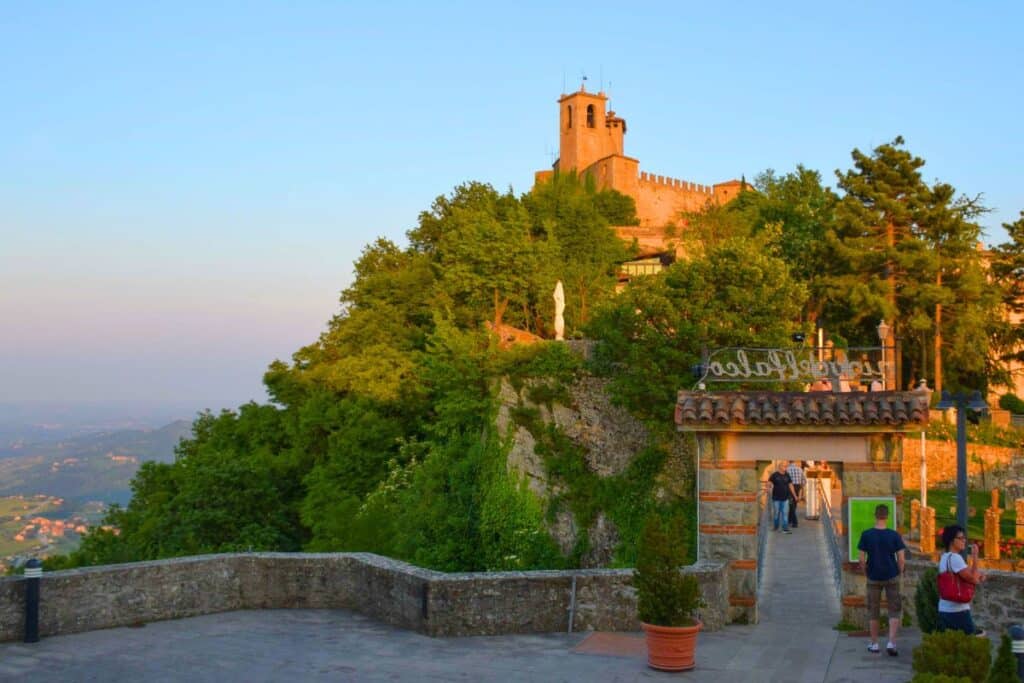
If you’re planning a trip to Italy, be sure to add this tiny gem to your itinerary.
Perched high above the Adriatic Sea on the slopes of Mount Titano, San Marino feels like something straight out of a Disney princess movie.
Surrounded entirely by Italy, it has a total area of just 24 square miles. But while it’s one of the smallest European countries, it claims an outsized place in history as the world’s oldest surviving republic.
Officially known as the Most Serene Republic of San Marino, this European microstate dates its founding to A.D. 301, making it one of the oldest sovereign states in the world.
Unlike many microstates that were shaped by royal families, San Marino developed as a republic and managed to maintain its independence through the rise and fall of the Roman Empire, the Middle Ages, and countless European conflicts.

San Marino’s historic center and Mount Titano are designated as a UNESCO World Heritage Site, and it’s easy to see why. The old town feels frozen in time, with stone streets winding between medieval buildings, fortified walls, and dramatic viewpoints.
The Three Towers of San Marino, perched along the mountain ridge, are the country’s most iconic landmarks and offer sweeping views across the surrounding countryside all the way to the coast on a clear day.
There’s plenty to see here to fill a full day. But if you have more time, this one’s worth spending at least one night like my husband and I did when we visited.
The National Museum provides a compact overview of the country’s long history. Wandering the streets themselves is part of the experience, with hidden stairways, scenic overlooks, and cafés tucked into centuries-old buildings.
For a country you can cross in under an hour, San Marino delivers a remarkable sense of depth. It is proof that tiny nations can preserve independence, identity, and history on a scale few larger countries ever manage.
How to Get There
There’s no airport in San Marino. The closest airport is Rimini, Italy. From Rimini, trains run along the Adriatic coast, followed by a short bus ride up to the historic center near Mount Titano.
Driving your own car is the easiest way to visit. From Florence, it’s a 3 hour drive.
Where to Stay
Staying inside the old town walls is a must. We adored our stay at the Hotel Rosa, but the Hotel Cesare is another great option. Both have views that are hard to beat.
Read More: The Fairytale Republic of San Marino: Italy’s Mountaintop Microstate
4. Liechtenstein
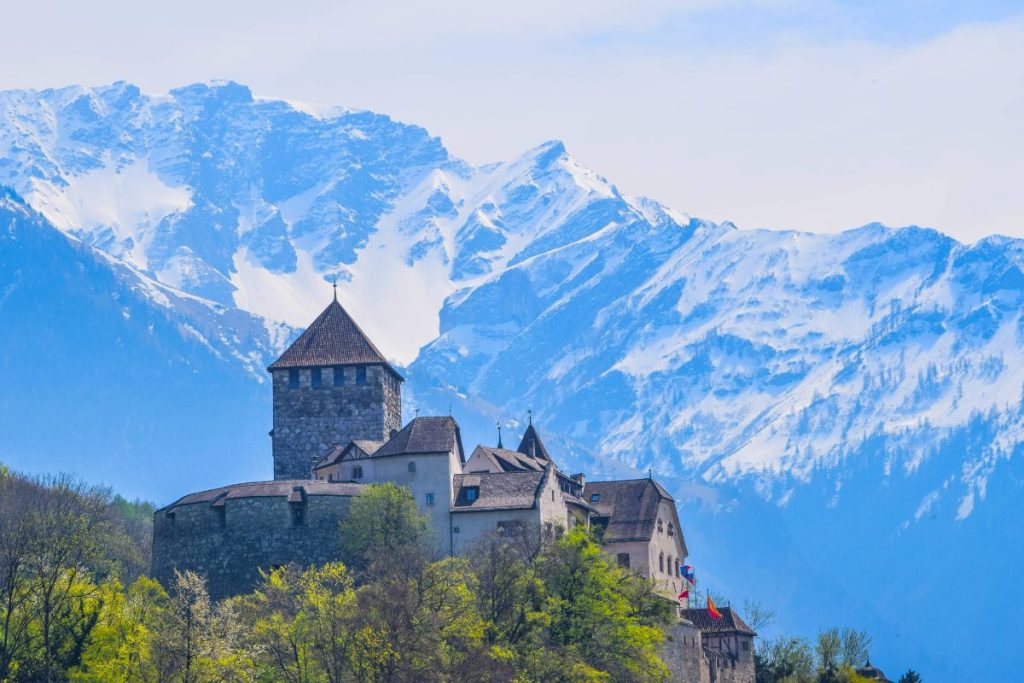
Tucked between Switzerland and Austria in Central Europe, Liechtenstein is one of the smallest and wealthiest countries on the European continent.
Covering just 62 square miles, the Principality of Liechtenstein’s long history is closely tied to noble families and international diplomacy.
The principality was established in the early 18th century and remains a constitutional monarchy today. It is one of Europe’s few remaining principalities and a fully sovereign state, despite its small size.
While it is not a member of the European Union, Liechtenstein participates in many international agreements and has a highly developed country’s economy.
The skyline is dominated by Vaduz Castle, the official residence of the ruling prince, perched high above the Rhine Valley. While the castle is not open to the public, it defines the city visually and reinforces Liechtenstein’s royal identity.
The nation’s capital, Vaduz, is compact and easy to explore on foot. Unlike many capitals, it feels more like a small town than a city.

Vaduz’s old town area is home to several excellent museums like the Liechtenstein National Museum and the Kunstmuseum.
Nature lovers will also find plenty to appreciate here. The country stretches from the flat Rhine Valley up into the Alpine Mountains, and you’ll find hiking trails, mountain views, and quiet villages within minutes of the capital.
Liechtenstein uses the Swiss franc as its currency but euros are often accepted as well (just be aware you’ll likely get Swiss francs back in change). The country’s excellent public transport and short distances make it an easy day trip, especially from Switzerland, Austria, or Germany.
How to Get There
Liechtenstein does not have its own airport. The closest airport is Zurich Airport in Switzerland about 90 minutes away. From there, trains run to Sargans or Buchs, followed by a short bus ride into Vaduz.
Where to Stay
For a central stay, Park Hotel Sonnenhof is one of the country’s most luxurious options.
5. Andorra
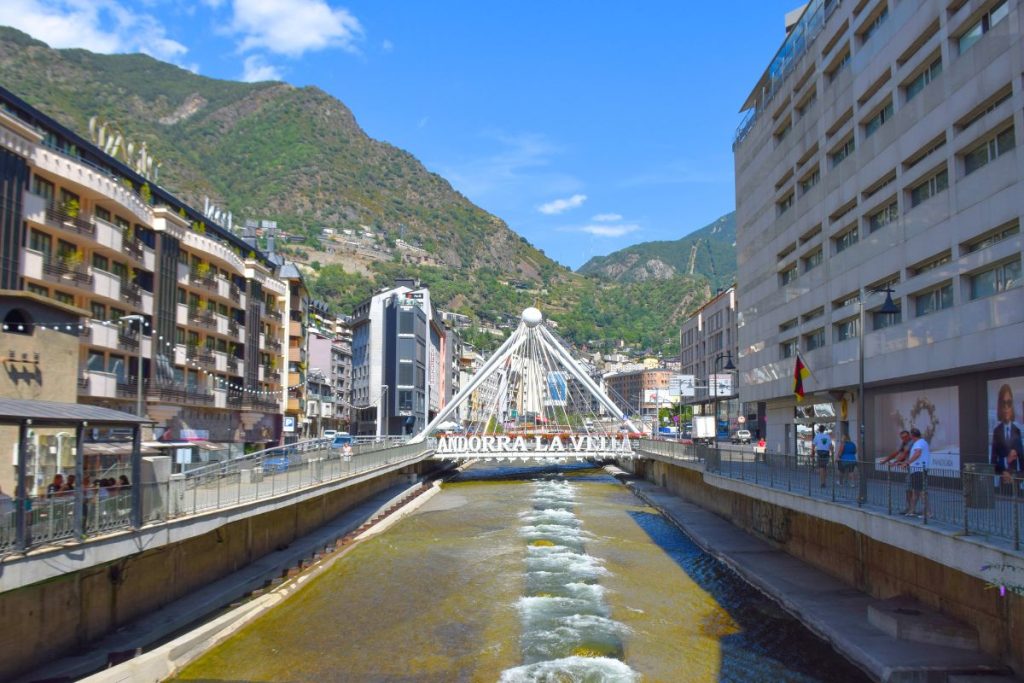
High in the Pyrenees Mountains between France and Spain, Andorra feels like a destination travelers stumble upon rather than plan around.
Covering just 181 square miles, the Principality of Andorra is one of Europe’s best-known tiny European countries, yet it delivers a surprising amount of variety for its small size.
Andorra’s political structure alone makes it fascinating. It is a sovereign state governed as a co-principality, jointly ruled by the President of France and a bishop from Spain.
This unusual system dates back to the Middle Ages and has allowed Andorra to maintain independence for centuries. Despite being a small country, it operates fully as a modern state with its own laws, institutions, and a thriving tourism-based economy.
The nation’s capital, Andorra la Vella, is the highest capital city in Europe and the natural starting point for any visit. Compact and walkable, it combines historic stone buildings with modern shopping districts.

The old town area, known as Barri Antic, preserves a quieter, more traditional side of the country, with narrow streets and historic landmarks like Casa de la Vall offering insight into Andorra’s political past.
What truly defines Andorra, though, is its landscape. Nearly the entire country is mountainous, so it’s a terrific destination for nature lovers.
Scenic valleys, alpine lakes, and well-marked trails dominate the terrain. Several protected national parks preserve these landscapes and offer hiking routes that feel far removed from Europe’s busier mountain regions.
Andorra is also one of Europe’s most popular destinations for winter sports. During the winter months, the country transforms into a ski hub, with expansive ski areas that attract visitors from across Europe.
In the summer months, the focus shifts to hiking, cycling, and outdoor festivals.
How to Get There
The closest airports to Andorra are Barcelona (2.5 hours) and Toulouse (just under 3 hours). From either city, buses or driving yourself are the easiest ways to reach Andorra la Vella.
Where to Stay
For a comfortable base in the capital, Andorra Park Hotel is a solid choice.
6. Gibraltar
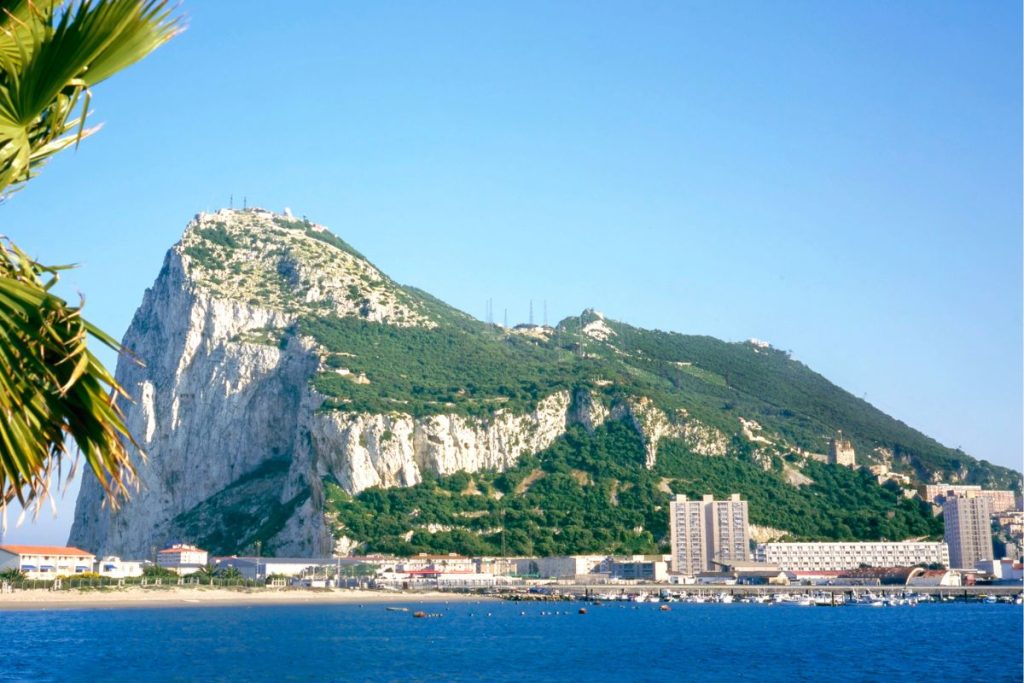
Clinging to the southern tip of the Iberian Peninsula, Gibraltar is one of Europe’s most unusual tiny countries.
At just 2.6 square miles, this tiny European country sits at the crossroads of continents, where Europe meets Africa across the narrow Strait separating Spain from the north African coast.
While Gibraltar is not an independent sovereign state, it functions as a self-governing British Overseas Territory with its own institutions, economy, and strong local identity.
It occupies a strategic position between the Mediterranean Sea and the eastern Mediterranean shipping routes, a location that has shaped its long history from ancient times through the modern era.
The star attraction here is the Rock of Gibraltar, a massive limestone monolith rising dramatically above the city. Much of it is protected as the Upper Rock Nature Reserve, one of the most distinctive national parks in Europe.
This is where you’ll find the famous Barbary macaques roaming freely. They’re the only wild monkey population on the European continent.

Gibraltar’s old town sits at the base of the Rock. It’s a quaint blend of British and Mediterranean influences where red phone booths, pubs, and fish-and-chips shops coexist with Spanish-style plazas and palm-lined streets.
It’s a fun place to explore for an afternoon and one of the most unique towns in Europe.
How to Get There
Gibraltar has a small airport (GIB) with limited flights from the UK. The airport is famous for its runway that crosses the main road into town.
However, most visitors arrive via Spain by taking a train from Seville or Madrid to the nearby town of Algeciras. From there, you can literally just walk across the airport runway and cross the border on foot!
Where to Stay
Located on the Rock of Gibraltar, The Rock Hotel offers classic character and excellent views.
7. Luxembourg
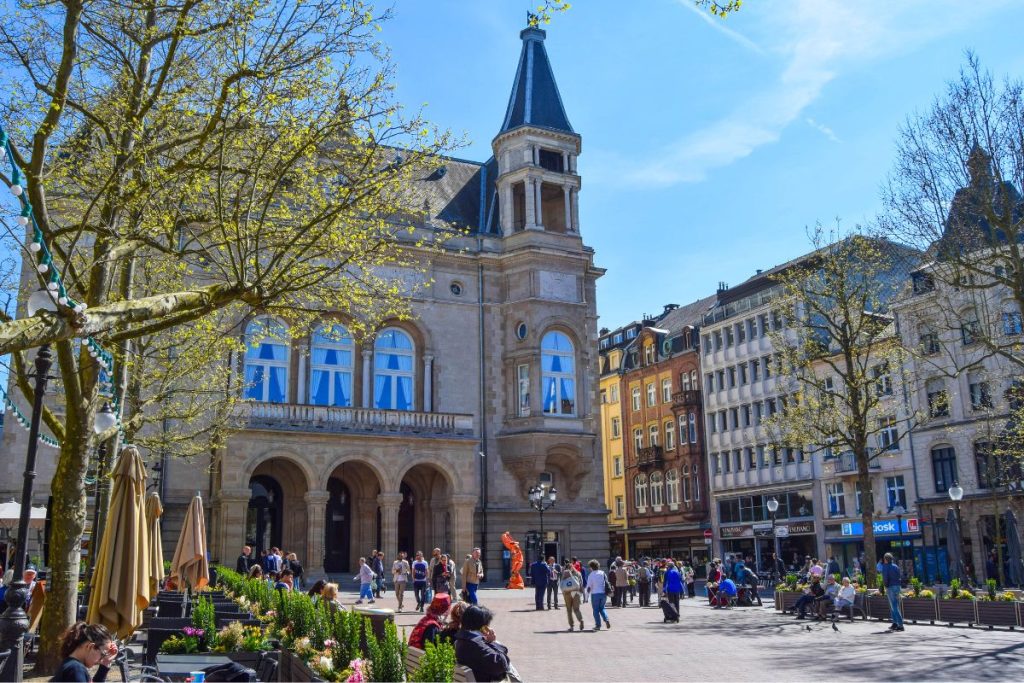
At 998 square miles or 2,586 square kilometres, Luxembourg is the largest country on this list, yet still firmly ranks among Europe’s smallest countries.
Tucked into Central Europe between France, Germany, and Belgium, Luxembourg is the last remaining grand duchy in the world and one of Europe’s most stable and prosperous sovereign states.
It has a long history shaped by its strategic position on the European continent, passing through the hands of empires, kingdoms, and international alliances dating back to the Middle Ages.
Today, it plays an outsized role in European politics as a founding member of the European Union and host to several major EU institutions.
The country’s capital, Luxembourg City, is compact, scenic, and layered with history.
Built across deep river valleys, with clifftop viewpoints overlooking lush green ravines and medieval fortifications, the city’s dramatic setting alone makes it worth visiting.
The historic old town and fortifications of Luxembourg City are recognized as a UNESCO World Heritage Site, and walking between the upper and lower city feels like stepping through multiple eras in just a few blocks.
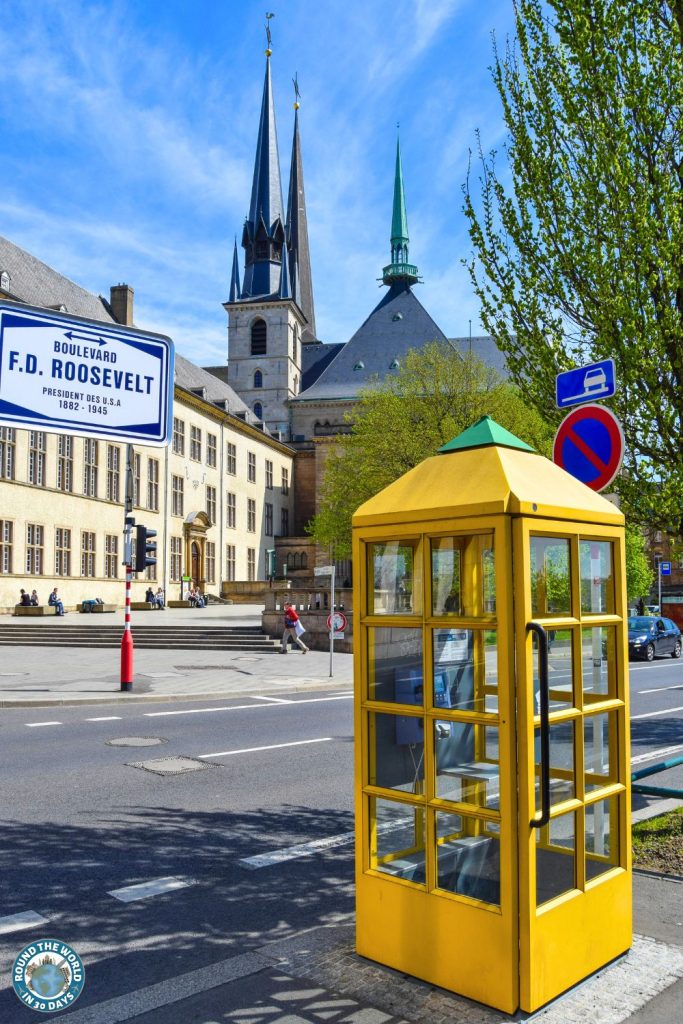
One of the city’s standout attractions is the Bock Casemates, a vast network of underground tunnels originally carved for defense.
Luxembourg is a trilingual country, with Luxembourgish, French, and German all recognized as official languages.
Getting around Luxembourg is easy. The country is famous for its free public transport nationwide. Well-connected train stations link the capital to neighboring countries. That’s why Luxembourg is one of the easiest small European countries to add to a broader itinerary.
How to Get There
Luxembourg has its own airport (LUX) just outside the capital. It is also well connected by train, with easy train journeys from Paris, Brussels, and major German cities to the main station in Luxembourg City.
Where to Stay
For boutique luxury and a prime location, book a night at the historic Hotel Le Place d’Armes.
Read More: The World’s Last Remaining Grand Duchy is a UNESCO-Listed Gem in the Heart of Europe
So Don’t Miss These Tiny Gems When You Visit Europe!
These petite European countries prove that you don’t need weeks or a massive itinerary to experience something memorable. You can cross borders, change languages, swap cuisines, and move through centuries of history in a single day without feeling rushed.
From the religious heart of Vatican City to the Alpine calm of Liechtenstein, each destination on this list is well worth adding to your next European vacation itinerary.
They’re proof that some of the continent’s most interesting experiences come in very small packages!